
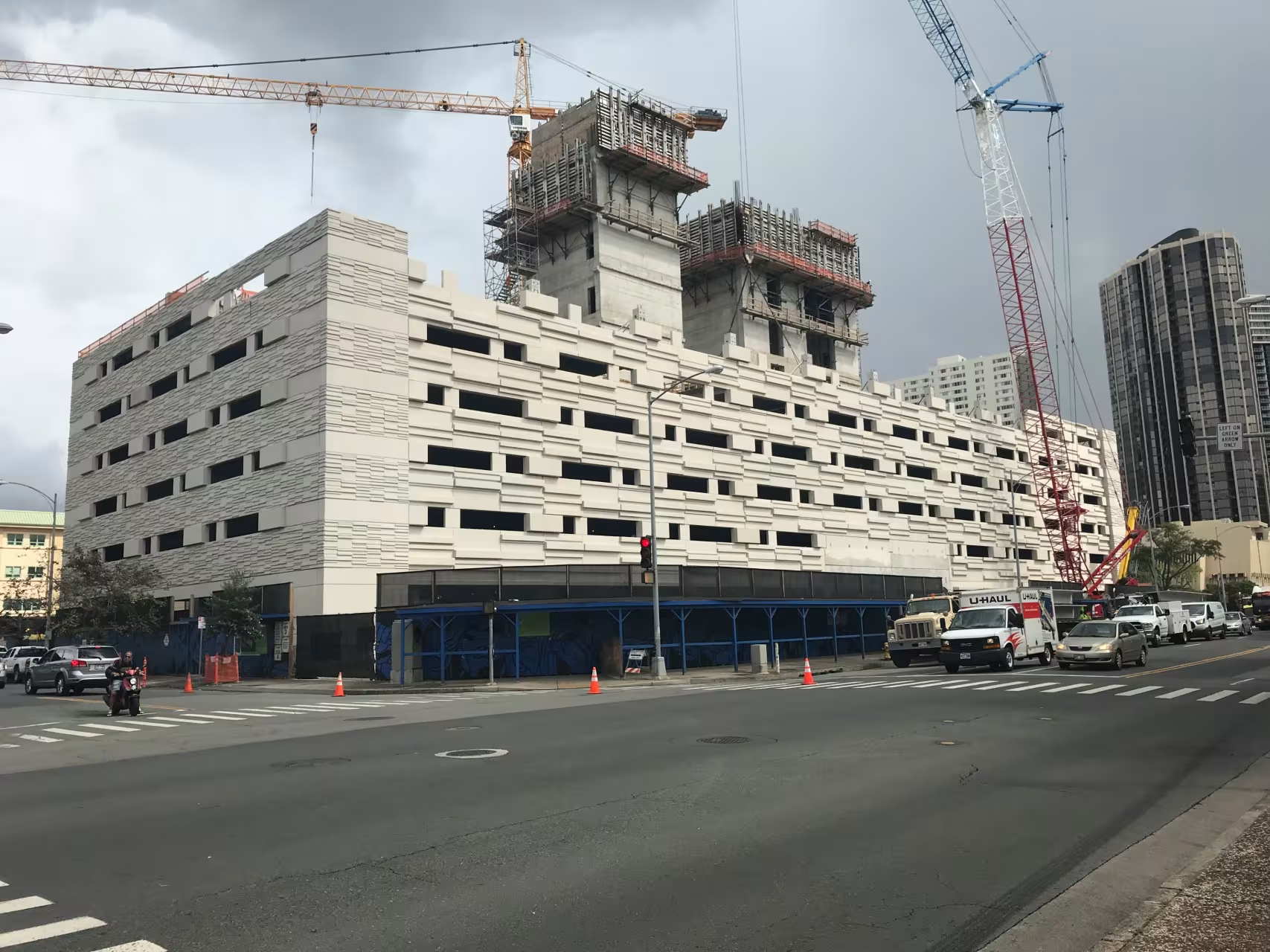
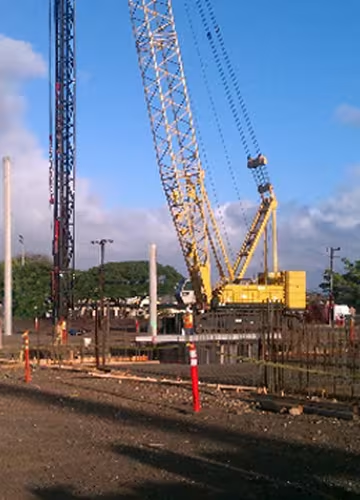
PILES
Precast foundations for buildings, marine and civil work.
Compare octagonal, square and fender pile sections. Section size, prestressing and reinforcing should be coordinated with the project design requirements.
Design guidance & published assumptions
The following information preserves the original product design guidance and its referenced standards. Project requirements and final design must be coordinated with GPRM and the engineer of record.
Introduction
- The product and design information contained herein is provided for general design assistance and preliminary product sizing. Complete calculations and details, including custom solutions, shall be provided to meet project specific requirements.
- Using the available sections will generally yield the most economical design solution.

Design
- The design of Prestressed Pile is usually undertaken by the Geotechnical and Structural engineers for the project. GPRM Prestress can design the pile sections with the appropriate information provided by the Engineer of Record.
- Under the IBC, the Seismic Design Category can have a significant effect on spiral spacing & size, and thus cost. Additional soils investigations may be warranted to ensure the correct SDC.
- Spiral and tie congestion can lead to fabrication difficulties and additional cost. Spiral size, spacing, and yield strength, as well as actual required concrete strength should be considered during design.
- General Material Properties:
- Strand. ½", 270k low relaxation.
- Spiral. 65 to 85 ksi min yield.
- Concrete. 6000 psi @ 28 days. 3500 psi @ release.
Typical bearing piles have relatively low Prestress requirements and a release strength of 3500 psi is usually sufficient. Soil conditions and not the structural capacity of the pile usually govern for building foundations in Hawaii. In such cases the use of a 5000 psi design strength should be considered.


